At the Women in Data Science (WiDS) India Conference 2026, hosted across three cities Bangalore, Delhi and Mumbai, one message rang clear: the future of AI will not be defined by technology alone – but by the humans who shape it.
Opening the event from the Indian Institute of Management Bangalore and livecast to the other two locations, Professor U. Dinesh Kumar set the tone with both candor and urgency. In rooms filled with data scientists, students, and industry leaders, he challenged assumptions about how we engage with AI. When he asked how many attendees had used AI tools in the last 24 hours, nearly every hand went up. But when he followed with how many fully trusted those outputs without verification, hesitation filled the room.
His point was simple but profound: AI is probabilistic, not deterministic. It offers correlation, not causation. And in that gap lies the responsibility -and opportunity -for human judgment. As AI becomes more embedded in our decisions, the need for critical thinking, skepticism, and deeper understanding becomes not optional, but essential.
That idea was powerfully extended in the keynote by Chisoo Lyons, Executive Director of WiDS Worldwide, who introduced the concept behind the WiDS Human Edge™ Curriculum. In a world racing to adopt AI, she argued, technical skills alone are no longer enough. The differentiators of the future will be deeply human capabilities: emotional intelligence, ethical reasoning, creativity, communication, and complex problem solving.
Through examples like wildfire data modeling, Lyons illustrated a critical truth: the most important decisions are not found in the data itself. They emerge from how humans interpret trade-offs, weigh societal impact, and make values-driven choices. She called to mind a powerful framing from Julie Sweet, CEO of Accenture, spoken at Davos 2026: “It’s not humans in the loop, it’s humans in the lead.”
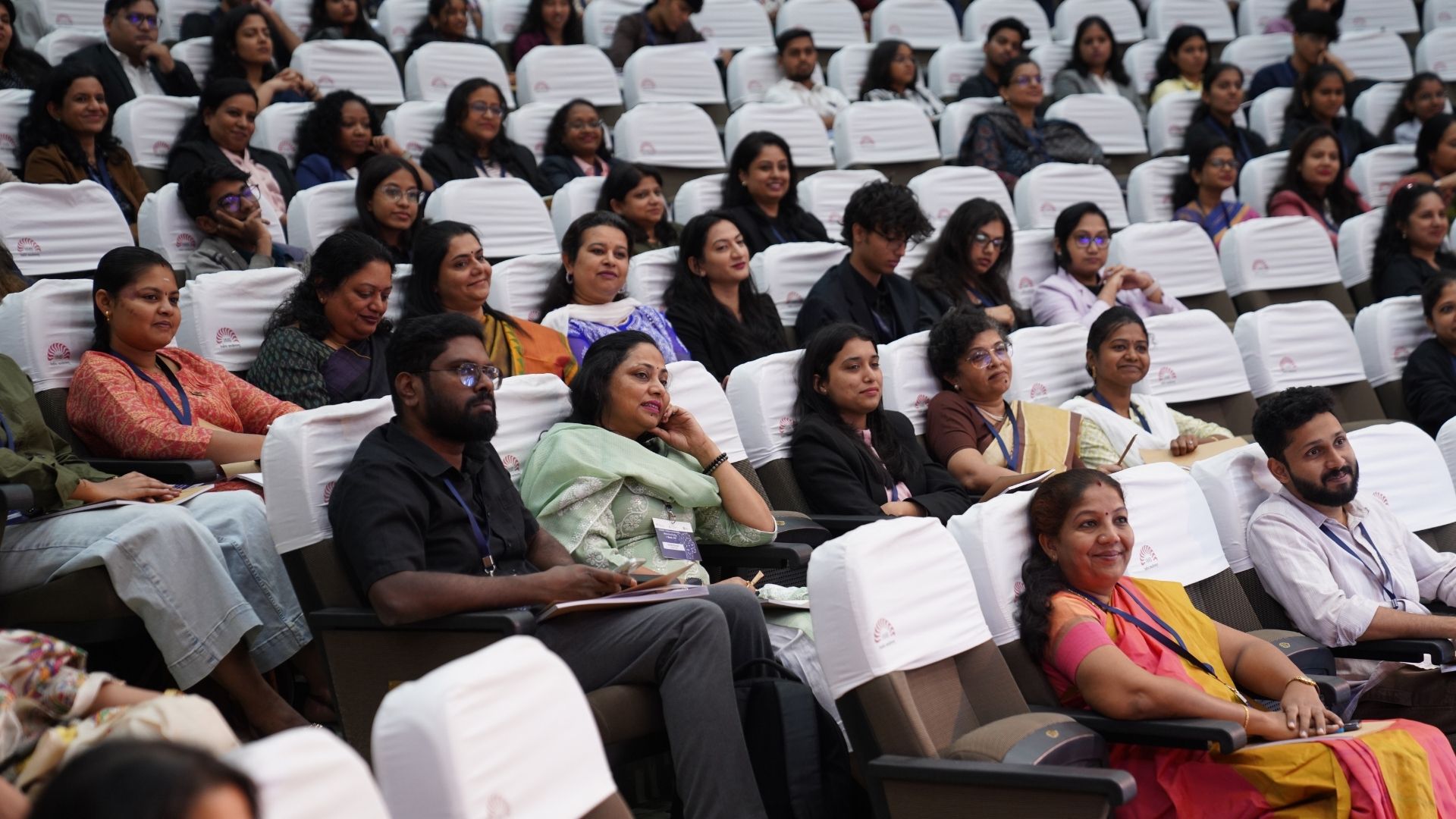
That call to action resonated deeply with the audience of nearly 500 attendees across the three cities. In one of the most memorable moments of the conference, Lyons urged attendees to quite literally “raise their hands” – to step forward, take risks, and actively shape the future of AI. The gesture became symbolic. In a rapidly evolving field where uncertainty is the norm, waiting to feel “ready” is no longer an option.
The energy across the parallel events reflected a community ready to answer that call. Attendees described the experience as inspiring, eye-opening, and transformative. From discussions on AI in healthcare and cybersecurity to debates on whether AI is making us faster or better, the conversations consistently returned to one theme: AI’s true value lies in how it is applied, not just how it is built.
Equally powerful was the diversity of voices driving those conversations. WiDS has grown into a global movement spanning over 60,000 members across 163 countries, with India emerging as a key hub of activity. The conference showcased a balanced mix of academia and industry, seasoned experts and emerging talent, and – critically – a strong representation of women leading innovation across sectors.
This diversity is not incidental; it is foundational. As AI systems increasingly shape society, the perspectives of those who build them matter more than ever. Inclusive communities like WiDS are not just expanding participation, they are improving outcomes.
WiDS India 2026 was more than a conference. It was a reminder that in the age of AI, our greatest advantage is not artificial intelligence, but human intelligence – applied with empathy, responsibility, and courage.
The future of AI will be built by those who raise their hands.
Written by Sally Taylor, Director of Strategic Marketing, WiDS Worldwide